1945
The Second World War
Born in 1940 into a Jewish family from Eastern Europe, with parents who survived the extermination camps, Zlotykamien was deeply affected from the outset by this violence and injustice, which fueled his work.
Throughout his life, whether faced with Hiroshima, genocides, Vietnam war, apartheid, terrorist attacks, or the war in Ukraine, the artist was always deeply affected. Why does humanity persist in destroying itself in this way?
1963
The streets to fight censorship
In 1963, Gérard Zlotykamien participated in the Paris Biennale as part of an installation called "L'Abattoir" (meaning "the slaughterhouse"), initiated by Spanish artist Eduardo Arroyo. Arroyo had painted portraits of four dictators: Hitler, Mussolini, Franco, and Salazar, inside the venue. However, since two of them (Franco and Salazar) were still alive and in power, the French Interior Ministry and Minister for Culture vetoed the work, deeming it politically dangerous. Zlotykamien's own work was hence hidden and he became indirect victims of this censorship.
Profoundly affected by this brush with institutional control, Zlotykamien declared he would never paint for museums again. He turned instead to the street as a space for freedom and resistance, seeking unmediated expression beyond the reach of officials and censors. There, he developed his signature "Éphémères" (meaning “Ephemerals”). Haunting silhouettes inspired by beings that live only twenty-four hours, yet which he saw as reflecting the fragility of all human life. These urban memorials became his protest against oblivion, marking the walls around the world with traces of those who might otherwise be forgotten.
Ironically, the French state later purchased the largest of his works for its collection, the very institution he had sworn to reject now preserving his art for posterity..
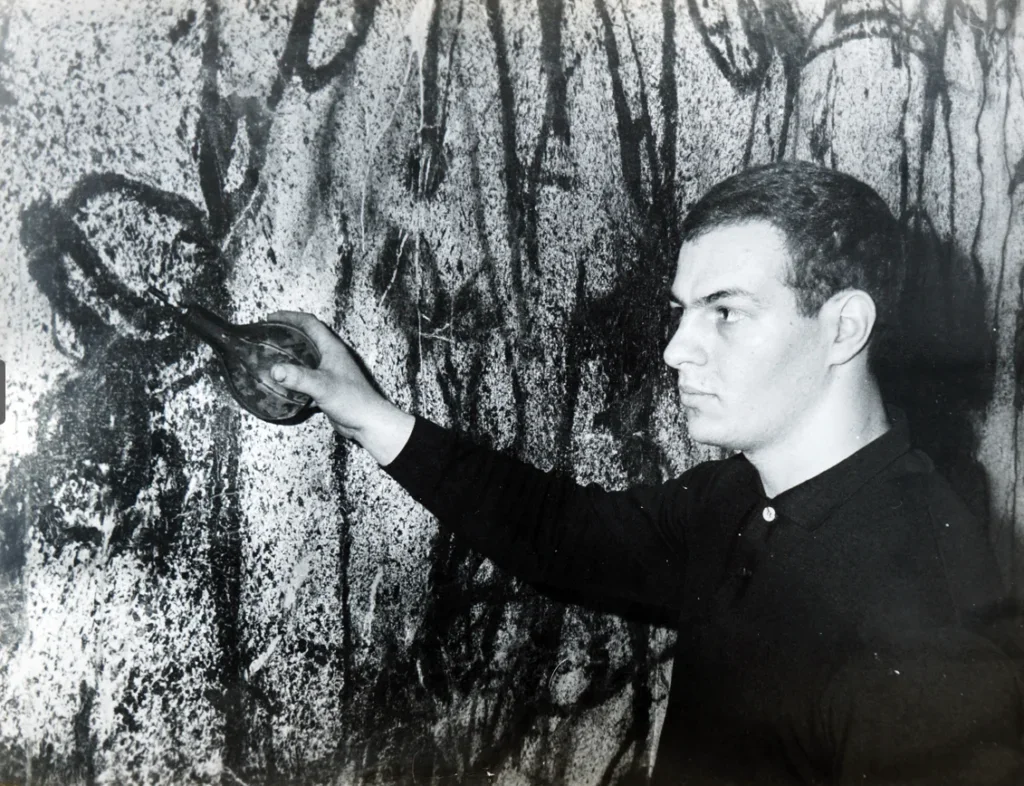
He is the pioneer of street art, having begun in 1963, even before spray paint existed, using an enema bulb to paint on the walls. He was also the first to be convicted, but never gave up. During a trial in Germany, he declared, “I will erase my works when you give me back mine”. Acquitted, he became a symbol of artistic resistance.
1965
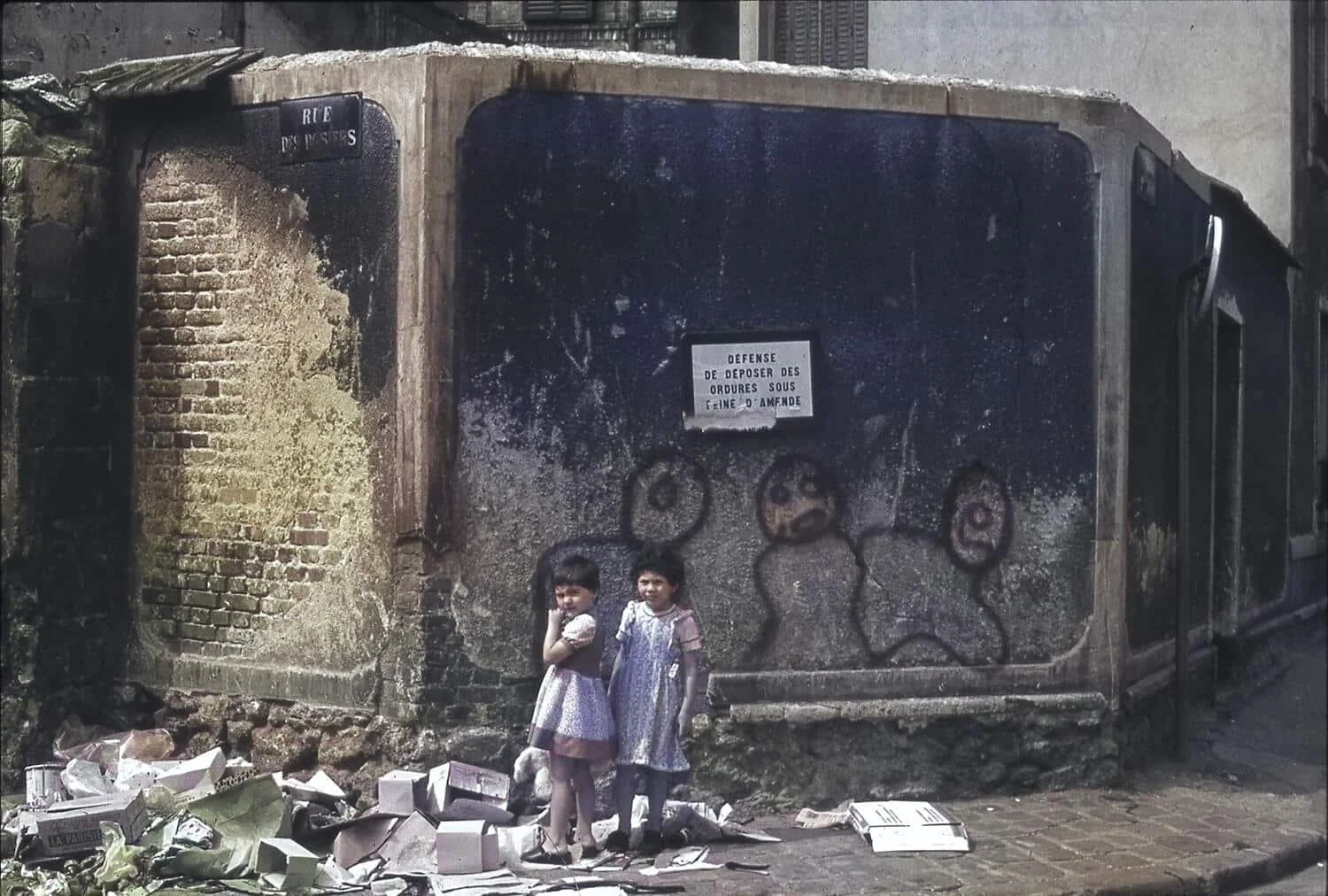
Rue des Rosiers
The art of Zlotykamien, or these delicate, ephemeral forms, feels like the drawings a four-year-old might scrawl, as if each sketch were the only memory that remained of the family lost to the war. They hover between presence and absence, fragile traces of love and loss, like ghosts pressed onto paper, holding onto a world that vanished before he could fully know it. Each line trembles with the echo of what once was, and what can never return.
Courtesy of Galerie Mathgoth1977
“Effacements”
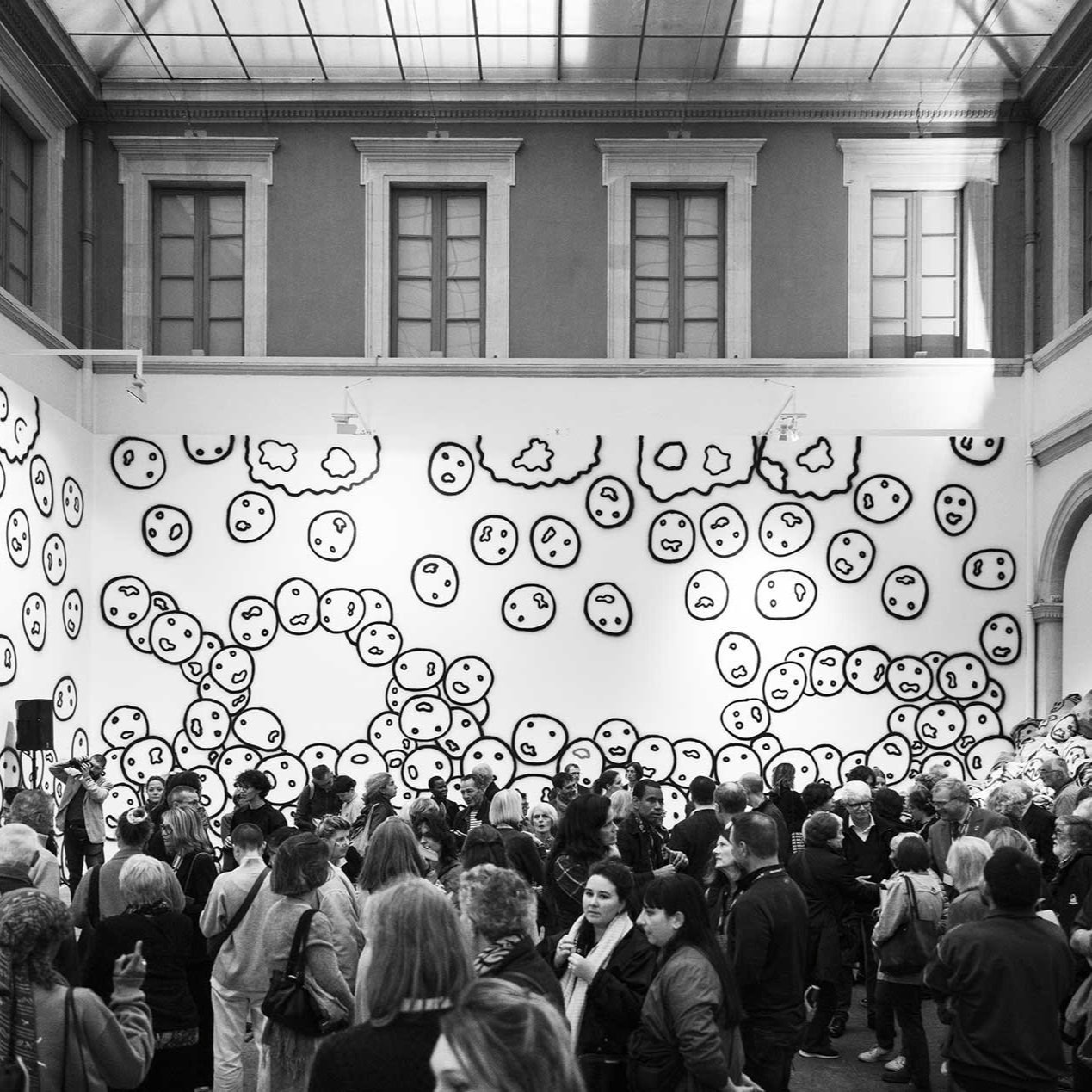
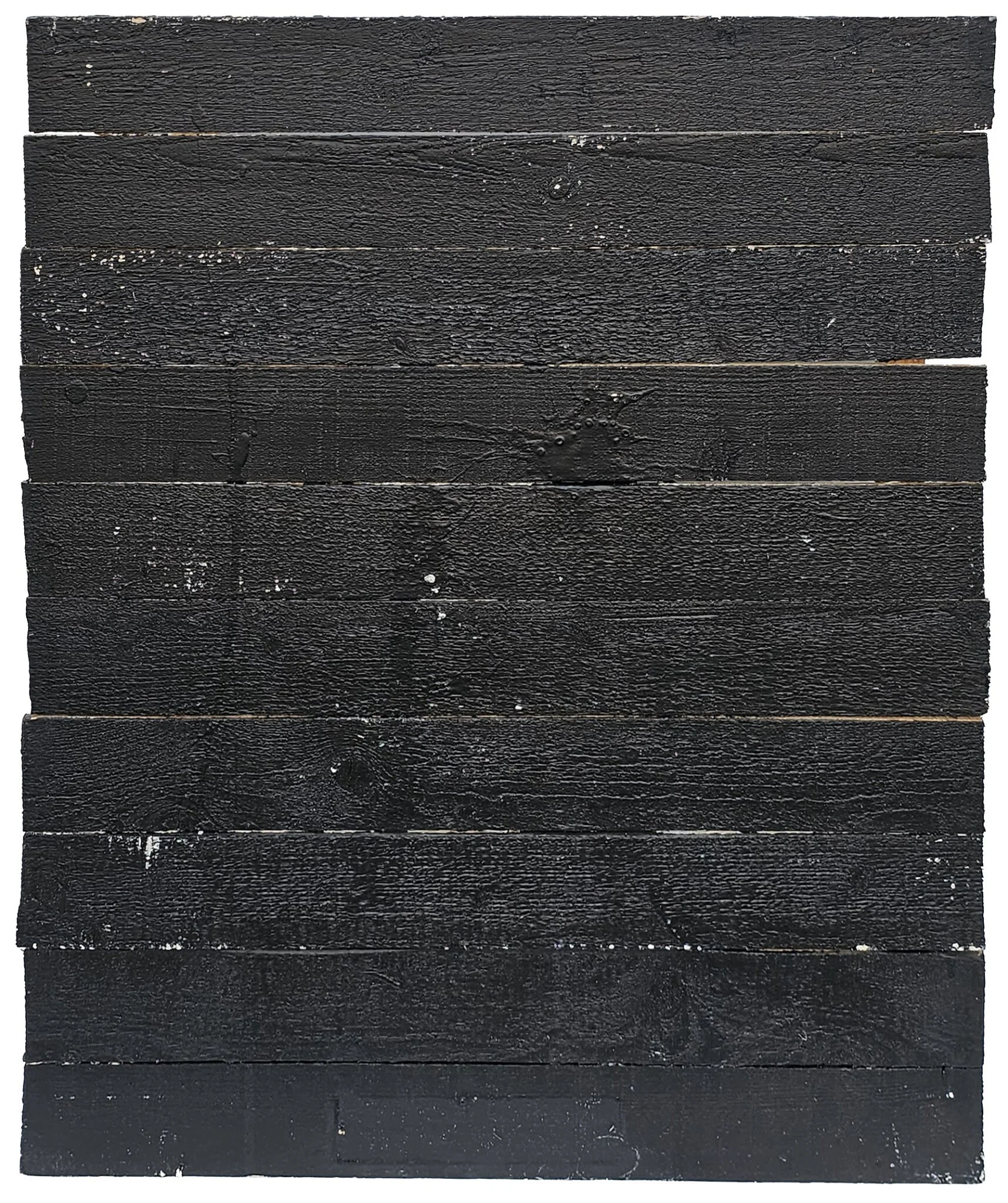
Disappearance permeates Zlotykamien's work, haunted by a family history. In 1977, at the Charley Chevalier Gallery, he unveiled fifteen “Éphémères”, only to cover them in black before the audience in a radical gesture he called “Effacement”. The black, dense and absolute, evokes carbon, death, and the cinders left in the wake of fire, transforming absence into a tangible presence. In this act, erasure becomes memory, and the void itself bears witness. In 2024, the Centre Pompidou acquired one of the fifteen works from this seminal exhibition, cementing its place in the canon of post-war European art.
1995
“Ashes”
In the series Ashes, Gérard Zlotykamien burns his paintings to collect their ashes, which he then encloses in jars. Through this ritualized act of destruction, the artist transforms disappearance into a tangible material, weaving a dialogue between presence and absence, memory and erasure. The jars, fragile and dark, seem to bear the weight of silent traces, vestiges of erased beings and gestures, evoking the echo of collective loss and forgetting. Each fragment becomes a mute testimony, a space of contemplation where art preserves what history has tried to obliterate.

2024
The Pompidou Center
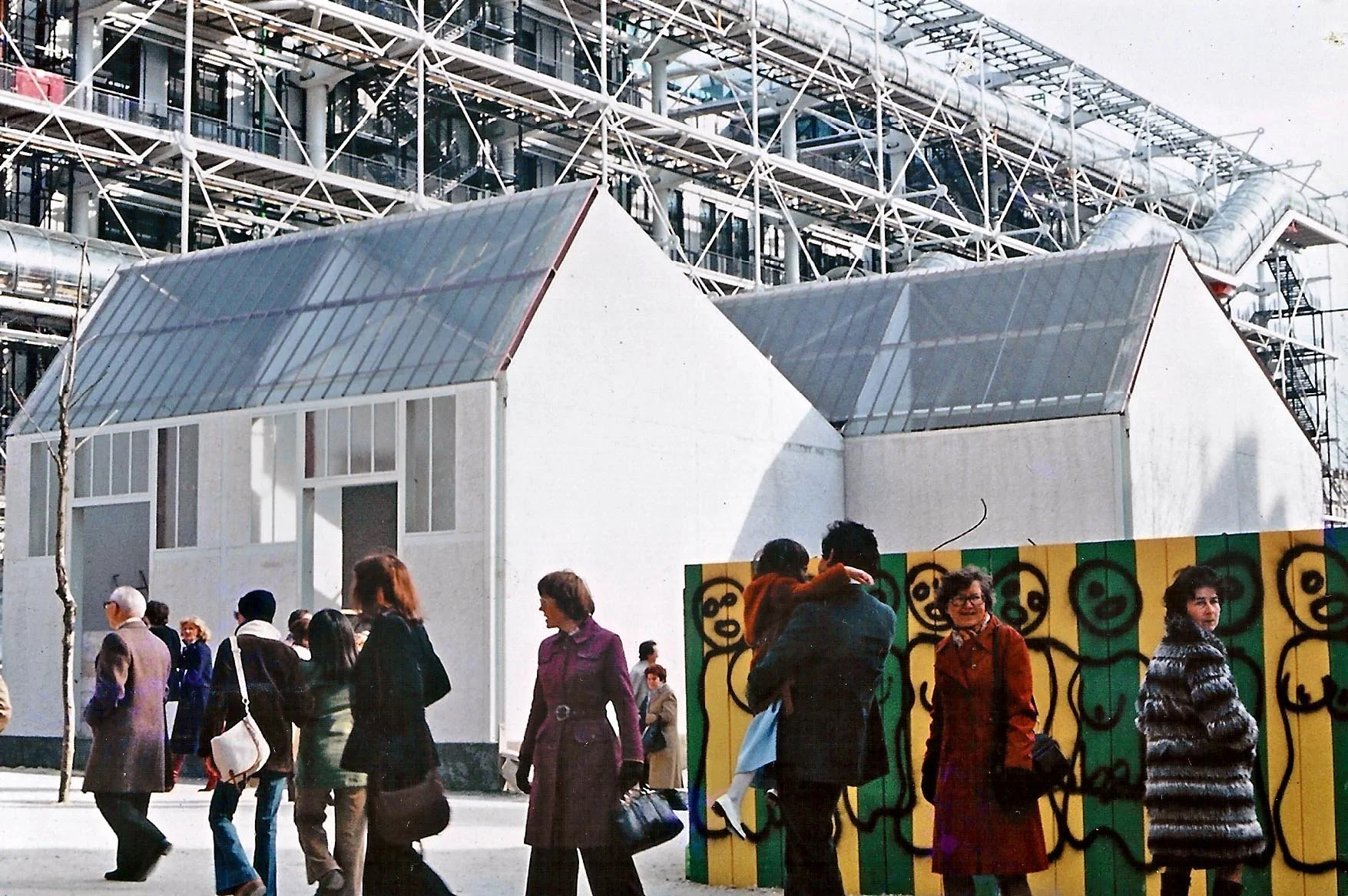
History proved him right: in 2024, the Pompidou Center honored his work by adding eight of his pieces to its collection. This gesture marked the recognition of an art form that was once illegal but has now become part of our heritage, proving that an act of transgression can convey a lasting political message. The photo below was taken in 1977, the year the Centre Pompidou opened. Would Zlotykamien have imagined that nearly 50 years later, his work would enter that same museum?